



Content systems design – for websites, products, and AI

Design the content systems your next transformation depends on.

I help content and product teams see what their current content can safely support – then design the system that makes websites, product experiences, support knowledge, and AI output consistent, reliable, and reusable.

Built on more than 15 years across website content strategy, product UX writing, information architecture, support knowledge base management, and technical documentation.

Selected prior enterprise contexts

Meta Google Grundfos Pret CIPD The AA

The problem

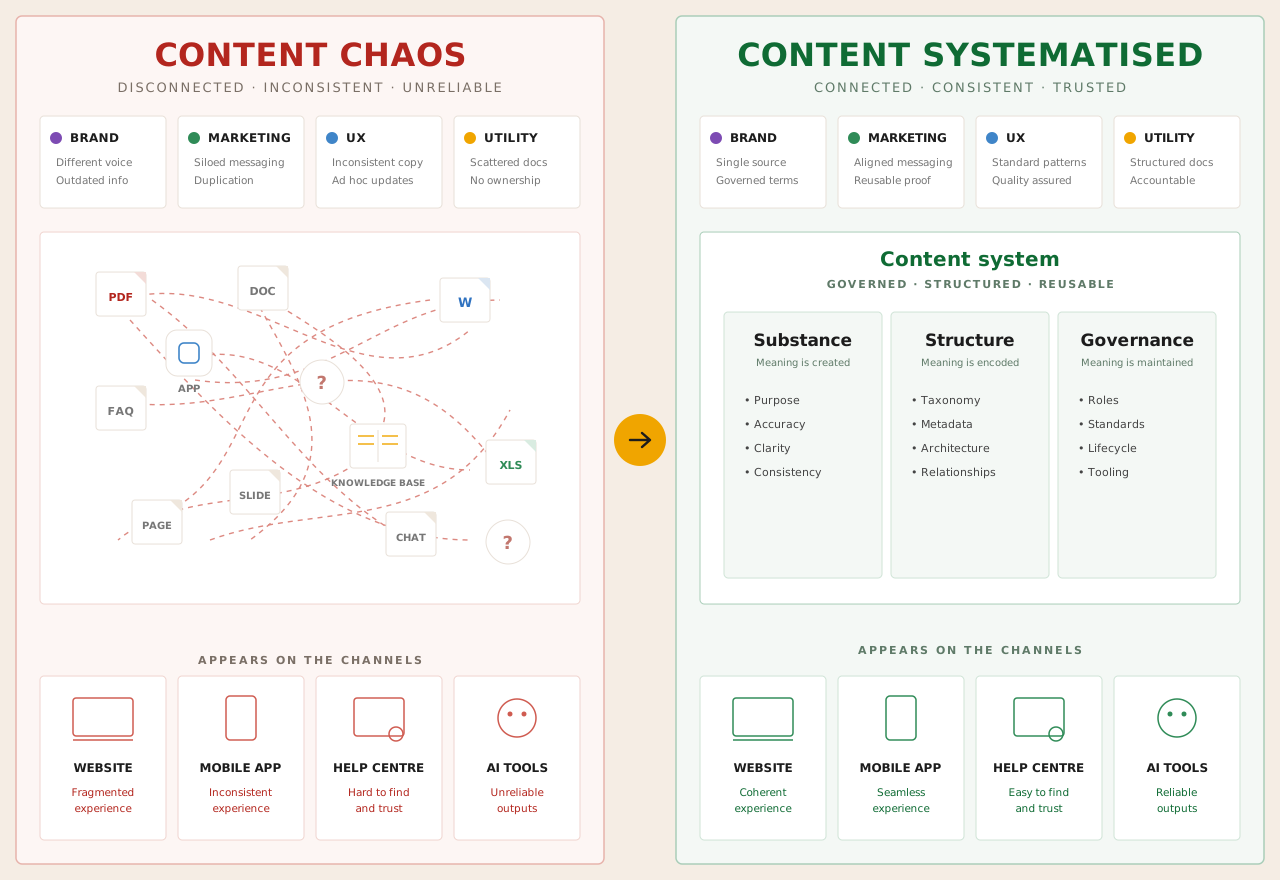
Content chaos. It's the norm.
But it doesn't have to be.

  • A website that never quite coheres. External or internal, the pages keep accumulating but the underlying system never settles.
  • A product whose language drifts. The same thing is described differently across screens, support paths, documentation, and release notes.
  • A support knowledge base nobody fully trusts. People can find answers, but still cannot tell whether they are current, complete, or safe to act from.
  • AI tools producing unreliable output. The model looks like the problem. Usually, the content it reads was never designed to be read that way.

The constant redesign cycles, the replatforming, the new tools – none of them seem to actually fix it.

Content chaos compared with content systematised: disconnected assets become a governed content system feeding coherent channels.

The reveal

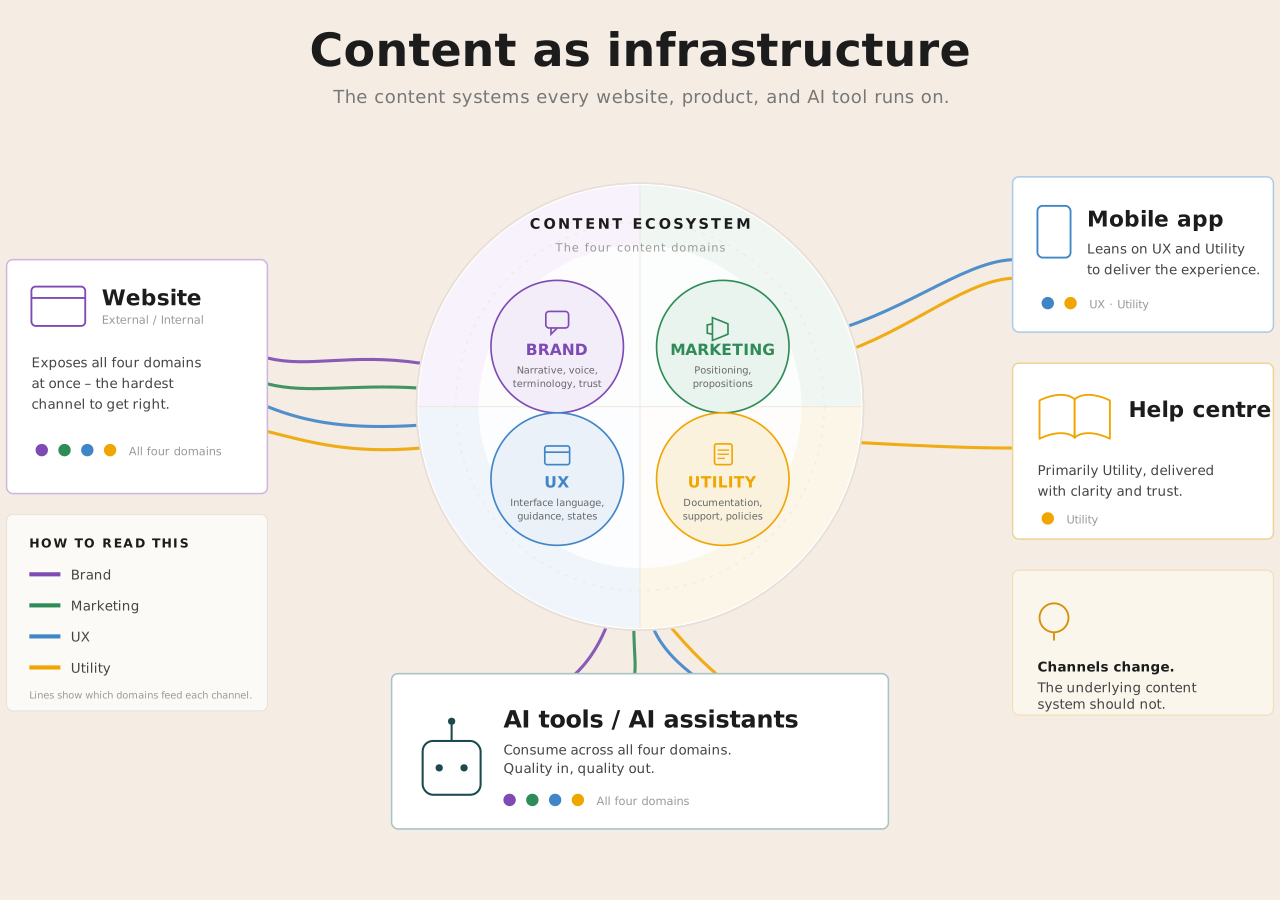
Websites, apps, knowledge bases, and AI tools are all drawing from organisational content.

Underneath, the same four content capability domains are at play.

Content as infrastructure: brand, marketing, UX, and utility content systems feeding website, mobile app, help centre, and AI tools.

A support centre mostly exposes Utility content. A product app cuts across UX and Utility. A website contains all four at once – which is why it is the hardest platform to get right. And an AI assistant consumes whatever you feed it.

Design the content system that feeds each channel, and the channel finally behaves.

The process

How it works.

01

Assessment

Content Capability Assessment™

One integrated assessment – run through the Content Infrastructure Diagnostic™ (CID™) – that reads the real state of your content and turns it into a decision-ready picture, built in three moves.

Domain capability assessment Score each domain's content capability across Substance, Structure, and Governance criteria.
Content ecosystem mapping Cross-domain scores combined into a weighted ecosystem – a clear picture of the whole organisation's content capability.
Systems capability mapping The ecosystem read translated into which initiatives are ready to run now, and which are constrained until the content system is fixed.
Produces your Enterprise Content Capability Profile
02

Design

Content System Blueprint

A channel-agnostic system built once and used wherever the organisation needs reliable content.

Source content Narrative Terminology Guidance Claims Documentation
Operations Ownership Review QA Governance Workflows
Agentic context Retrieval Evaluation Boundaries Source priority Rules
03

Execution

Channels and platforms

The designed system is installed in the channels and platforms where the work actually happens.

Websites Product UI Knowledge bases Support centres AI environments

Outcome: one coherent content system – consistent, reusable, maintainable, migration-ready, and interoperable across channels.

Enterprise Content Capability Profile

Providing the decision intelligence baseline for your next transformation investment.

The most valuable outcome of the Content Capability Assessment is the Enterprise Content Capability Profile – an evidence-rich, qualified picture of content capability across organisational domains and channels. This is the asset that tells you where your ecosystem is strong, where it is constrained, and what future transformation investment can safely depend on and be prioritised against.

Enterprise Content Capability Profile Sample organisation Illustrative dashboard view

Domain-level capability assessment

Brand

Substance: 8 | Structure: 4 | Governance: 3

Marketing

Substance: 6 | Structure: 7 | Governance: 5

UX

Substance: 7 | Structure: 5 | Governance: 8

Utility

Substance: 4 | Structure: 3 | Governance: 2

Overall Content Capability Score

Constrained
5.2

Breakdown by diagnostic layer

Substance 6.3
Structure 4.8
Governance 4.5

Systems capability map

Website transformation High capability
Campaign & lifecycle messaging Medium capability
Technical & product documentation Medium capability
AI customer-query support assistant Low capability
Agentic orchestration Low capability

Illustrative example. Real client values are generated from a live CID™ diagnostic.

Strategy-led design. Bounded installation. Tool-agnostic, time-boxed, handoff-led.
Learn more about the methodology →

About Joe

Experienced content strategist, content designer, and (of course) systems thinker.

Hi, I'm Joe. I've spent more than 15 years working across different types of content systems – from websites, to mobile and web app UX, information architecture, support knowledge bases, and editorial strategy.

Every time we communicate something online, we’re either adding value or taking up space. I help organisations to understand where they’re doing the latter – and empower them to do more of the former. Then systematise it.

Joe Phillips

Selected prior enterprise contexts

Meta Google Grundfos Pret CIPD The AA

What you might be wondering

Worth addressing directly.

Does this person actually understand my world?

Most likely, yes – I have spent 15+ years inside it: website content strategy, product UX writing, information architecture, support knowledge bases, and technical documentation.

Is this just a strategy deck that ends up in a drawer?

No. The output is a content system you can open and operate – source content and operating rules, structured like a codebase and handed to your team.

Do we need this before the next replatform or AI rollout?

That is exactly when it is cheapest. Assess first and the investment lands on something solid; skip it and the spend scales the same constraint.

Start with the content system, not the next tool.

A free 30-minute diagnostic conversation about the content system your next website, product, or AI investment will depend on. No pitch.

Book a diagnostic conversation